
Cost to Coat a Garage Floor in Jacksonville, NC (2026)
Stoutwell Garage Renovations · October 1, 2026 · 7 min read
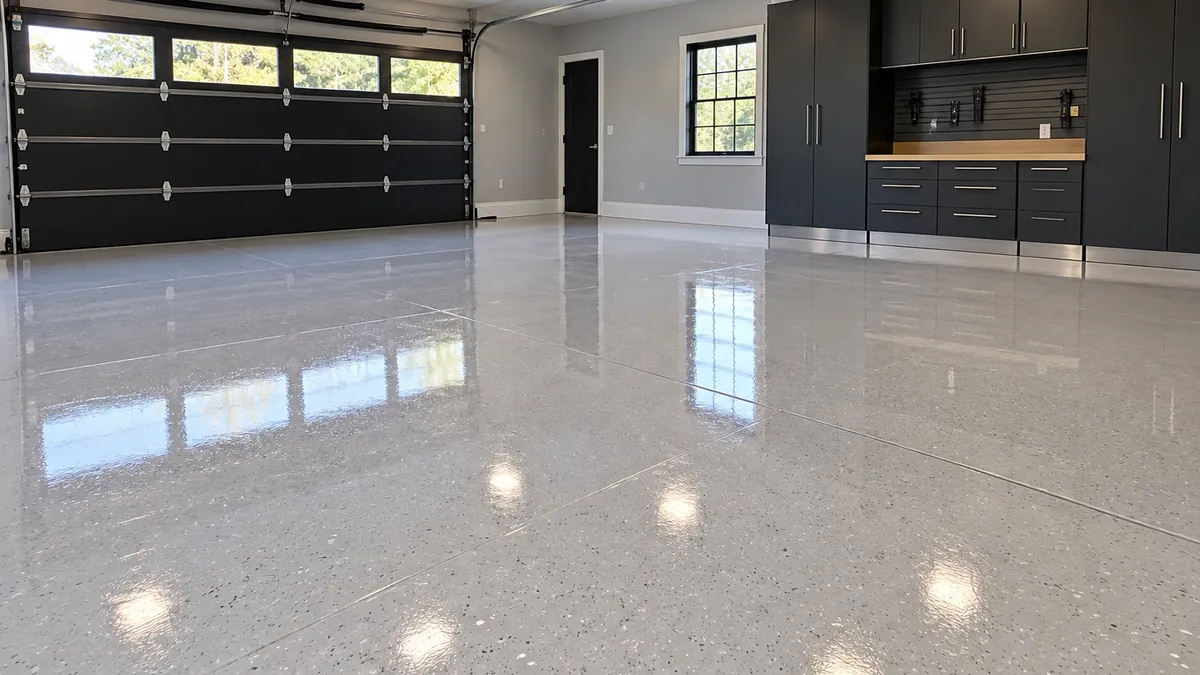
Our installed price for garage floor coating in the Jacksonville area runs $3 to $12 per square foot, and your own number comes from a free written quote. What a coated floor costs in Jacksonville, NC depends on the measured size of your garage, how much prep the slab needs, what a moisture test shows and which system goes on top. When you are ready for real numbers, the Jacksonville prices page explains what our written quote covers.
The wide spread in that range is the useful part: two garages of the same size can be priced far apart. Here is why, with the details that matter in Onslow County.
What garage size does to the total
Our range is per square foot, so area comes first. Here is what it works out to on common garage sizes:
| Garage | Size | Our installed price |
|---|---|---|
| One-car | 12 by 20 feet, 240 sq ft | $720 to $2,880 |
| Standard two-car | 20 by 20 feet, 400 sq ft | $1,200 to $4,800 |
| Roomy two-car | 24 by 24 feet, 576 sq ft | $1,728 to $6,912 |
| Three-car | 24 by 30 feet, 720 sq ft | $2,160 to $8,640 |
Many two-car garages are wider or deeper, some have a workshop corner or a third bay, and an entry step or short stem wall adds area if you want them coated with the floor.
Measure your own floor wall to wall, or let us measure it at the visit. Because sizes vary so much, we price every garage on its measured floor rather than on a label like “two-car”, and your written quote shows that area.
Cost by system, and what raises the price
The system sets how many layers go down and how long the job takes. A solid color epoxy floor is the simplest: a ground slab, one color of epoxy and a topcoat. A flake floor adds a full broadcast of decorative flake and a clear topcoat, and PPG’s garage floor prep guidance describes multi-layer flake systems as more involved. A polyaspartic or polyurea system changes the chemistry: supplier Pflaumer says polyaspartics cure faster than epoxies, do not yellow in sunlight and can go on in colder conditions. What changes from one system to the next is the number of steps, the material and the time on site, each its own line on a quote.
The slab can move the price as much as the system does:
| What the slab needs | Why it adds to the quote |
|---|---|
| Crack and spall repair | Each repair is material and time, done after the grind |
| Moisture work | A wet reading can change the prep, the system and the date |
| Sealer removal | Rust-Oleum says a sealer must be ground or shot blasted off |
| Old paint or coating removal | Peeling layers come off before anything new will hold |
| Extra coats or a step | More layers and more area mean more material and labor |
The sealer line deserves a word in Onslow County. The county’s median home was built in 2001, against 1993 for North Carolina as a whole (Census ACS 2024 1-year). Newer slabs can carry a curing compound or sealer from construction, and Rust-Oleum’s EpoxyShield garage floor data sheet says a sealed floor’s sealer “will have to be removed by grinding or shot blasting.” Whether yours has one is found at the visit.
What Jacksonville’s wet summer adds to a quote
This is the part of a Jacksonville quote that a per-square-foot range cannot show. On NOAA’s 1991 to 2020 climate normals for the Jacksonville EOC weather station, the area averages 58.90 inches of precipitation a year, and 27.98 inches of it falls in June, July, August and September. September is the wettest month at 7.85 inches. Those same months are the hottest, with average highs from 84 to nearly 90 degrees, and the station averages 56.3 days a year at 90 degrees or above.
Coating products set limits for the day they go on. The same Rust-Oleum sheet says to apply its water-based garage epoxy only when the air, the material and the surface are between 60 and 85 degrees, with the surface at least 5 degrees above the dew point and humidity no higher than 85 percent. Other products set other limits. Winter has its own edge: the station averages 63.1 nights a year at or below freezing.
What that adds to a quote is not a surcharge. It adds three things you should see in writing:
- A moisture test, because a slab’s moisture is only known by testing it. A moisture test is part of the quote. The result is known only after the slab is tested on site, and a wet reading can change the prep, the system and the price.
- The product named, so you can read its temperature, humidity and dew point limits for the week you book.
- A plan for a wet day, saying whether the date moves and whether moving it changes the price.
A faster-curing system can need a shorter dry stretch, so a polyaspartic topcoat is worth asking about for a summer booking.
A DIY kit or a professional job
A store kit costs less up front than an installed floor. The trade is the prep. Rust-Oleum’s sheet for its water-based kit lists a practical coverage of about 250 square feet per kit, about one 12 by 20 foot one-car garage, so a two-car floor needs more than one. The same sheet asks for a clean, etched floor that is “free of curing agents and sealers,” says the product is “not intended for use on … floors that have a moisture problem,” and limits the application to the temperature and humidity window above.
So a homeowner with a kit takes on the same questions a professional quote prices: is the slab sealed, is it dry, and is the day inside the product’s limits? A kit applied over a sealer or a damp slab is outside what its maker intends, and a failed coating then has to be ground off before a new one goes down, which adds removal to the next quote. A professional job costs more because grinding, repair and testing are in it. Compare the two on what each includes, not only on the price tag.
What a written quote should list
Whoever you ask, a Jacksonville quote should be specific enough to compare line by line:
- The measured floor area, and whether the step or stem wall is included.
- The prep method: grinding, and to what profile.
- Each crack or spall repair, and any sealer or old coating removal.
- The moisture test, and what happens if the slab reads wet.
- Every layer of the system, with the product named.
- How a rain day or a humid spell is handled, and whether a moved date changes anything.
A one-line “epoxy floor” quote is hard to judge, so ask for it broken out. Our Jacksonville garage floor pricing page covers the local picture, and the national epoxy garage floor cost guide explains what changes a quote.
FAQ
What is the average cost to epoxy a garage floor in Jacksonville, NC?
Our installed price for garage floor coating in the Jacksonville area runs $3 to $12 per square foot, and every garage is priced on its own measured floor. After we measure and moisture-test your floor, you receive a free, detailed written quote for your garage.
What does it cost to epoxy a 2-car garage in Jacksonville?
On a standard 20 by 20 foot two-car garage, our installed price works out to $1,200 to $4,800, depending on the prep and the system. Many garages are larger, so the written quote prices your real floor after it is measured and the slab is tested.
Does the rainy season change the price?
Not on its own. June through September brings close to half of Jacksonville’s yearly rain on NOAA’s normals, so the product and the date are planned around humidity and heat. If the slab tests wet or needs a different system, the quote changes with that work.
Is a DIY kit cheaper than a professional coating?
The kit costs less up front, but you do the prep, and the prep is most of the job. Rust-Oleum’s own kit sheet says the product is not meant for floors with a moisture problem and that a sealer must be ground or blasted off first.
When you want numbers for your own floor, the Jacksonville garage floor coating page explains the systems we install across Onslow County, and the Jacksonville quote form is where to begin. Tell us the garage size and when you want the work done, and we will follow up, measure and test the slab, then give you a written quote.
Want Advice on Your Own Floor?
A guide can explain the options. A free quote tells you what your slab needs.
 Cost
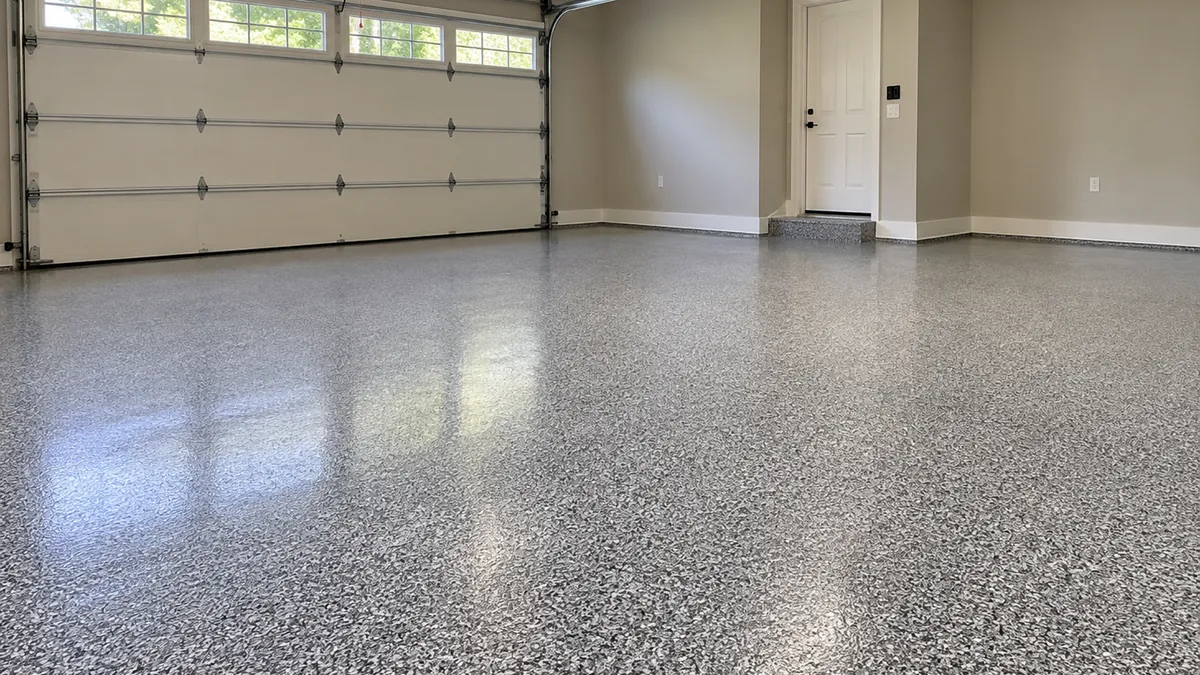
Cost to Coat a 2-Car Garage Floor
Our installed price to coat a 2-car garage floor runs $1,200 to $4,800 on a 20 by 20 foot slab. Totals by garage size, and what moves yours.
 Cost
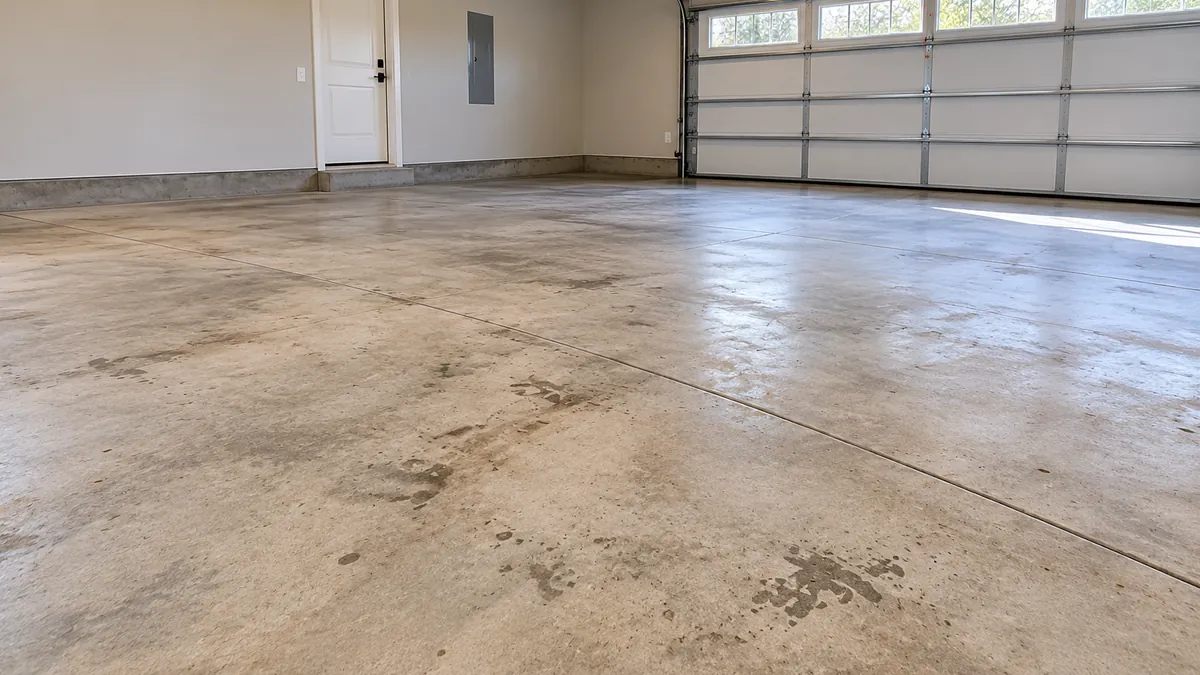
Epoxy Garage Floor Cost: What Changes a Quote
Epoxy garage floor cost: our installed price is $3 to $12 per square foot. Totals by garage size, and how slab prep, moisture and the system move a quote.
Guide Best Garage Floor Coating for Your Home
The best garage floor coating depends on how you use the garage. Flake, solid color epoxy, metallic and polyaspartic ranked by use, with a side by side table.
Ready for a Free Quote?
Get a free, no-obligation quote for property in the Jacksonville area.
Get Your Free QuoteOr call us directly: (919) 219-2946