
Garage Floor Coating Colors: How to Choose
Stoutwell Garage Renovations · November 15, 2026 · 8 min read
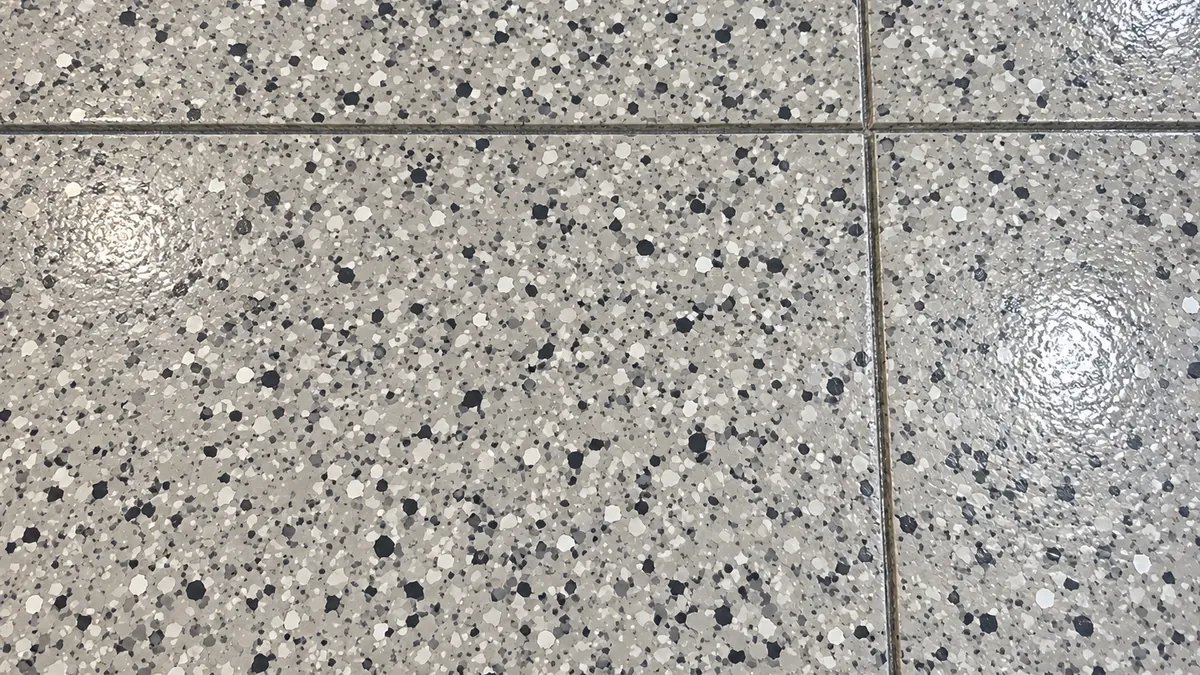
Garage floor coating colors come in three families: flake blends, solid colors and metallic tones. For most garages, a gray-based flake blend is the easiest to live with because it hides dust, tire marks and salt. Pick a color by how the garage is used and lit first, then by how it matches the house.
Color is the part of a coated floor you see every day, so it is worth a little thought. Below are the main options in each family, how color hides or shows the dirt a garage collects, how it changes the light, how sun treats light and dark shades, and how to tie the floor to the house and cabinets. The color you choose does not change our installed price of $3 to $12 per square foot; your own number comes from a free written quote.
How to Choose Garage Floor Coating Colors
Start with three questions:
- How dirty does the garage get? A car that comes and goes every day, kids, bikes, lawn equipment and winter salt all point to a blend that hides more.
- How much light does it get? A garage with one small window and a single bulb benefits from a lighter floor. A bright garage with a door that is often open can carry a darker one.
- What finish do you want? Speckled flake, one even solid color, or a glossy metallic each come with their own range of colors. If you have not picked a finish yet, our flake vs metallic vs solid color guide compares them.
Once those are settled, matching the house is the easy part.
Flake Blends
Flake blends are mixes of colored chips broadcast into a base coat and sealed under a clear coat. Because each blend mixes several colors, it hides more than any single color can. They fall into three broad groups.
Gray-based blends. Grays mixed with black, white and sometimes a touch of blue or tan. They suit the widest range of garages because they hide dust, tire marks and road salt, they look clean next to white, gray or black cabinets, and they suit almost any house. A blend with more white reads lighter and brighter; one with more black reads deeper and hides tire marks better.
Earth-tone blends. Tans, browns, creams and warm grays. These suit houses with brick, stone, wood or warm siding, and they hide sandy dirt and dried mud well. They can make a garage feel warmer and less like a workshop.
Dark blends. Charcoal, black and deep gray with lighter accents. These look rich and hide oil spots and tire marks, but a very dark blend can show light dust, dried salt and scratches. A few lighter chips in the mix keep it practical.
A full broadcast flake floor is the most forgiving way to add color. See our flake coating page for how the system is built.
Solid Colors
A solid color floor is one pigmented color across the whole garage, usually with a clear coat over it.
Light and mid grays. The easiest solid colors to live with. A light gray brightens the garage and looks clean, but tire marks and oil show sooner. A mid gray is a good middle ground.
Tan and beige. Warm, soft and good at hiding sandy dust. They suit warm-toned houses and garages used as workshops or storage.
Dark grays and charcoal. They look sharp and hide oil, but show dust, salt, footprints and scratches, and they get warmer in direct sun.
Because a solid color has no pattern, it shows the slab underneath more honestly. Repaired cracks and old stains can show through, so solid colors suit a slab in good shape.
Metallic Tones
A metallic epoxy floor has metallic pigment mixed into the coating, so the color moves in swirls and shifts as it catches the light. Common tones are silver, pewter and charcoal grays, coppers and bronzes, deep blues, and blacks with a silver or gold shimmer. Silver and gray tones are the easiest to pair with the rest of the garage; coppers and blues make a bolder statement. No two metallic floors look exactly alike, so a photo shows the style, not the exact floor you will get.
What Hides Dust, Tire Marks and Salt
| What the garage collects | Hides it best | Shows it most |
|---|---|---|
| Fine dust and pollen | Mid-tone flake blends | Dark solids and dark metallics |
| Tire marks | Dark and mid-tone blends | Light grays and tans |
| Winter salt and dried slush | Gray and earth-tone blends | Charcoal and black |
| Oil spots | Dark blends and dark solids | Light solids |
| Scratches and small chips | Busy flake blends | Glossy dark solids and metallics |
| Water spots | Flake blends | Glossy solids and metallics |
The rule underneath the table is simple: pattern hides more than a single color, and mid-tones hide more than very light or very dark shades. Whatever color you choose, regular sweeping and a mild cleaner keep it looking right. Our how to clean an epoxy garage floor guide covers the routine.
Light, Brightness and Reflection
A coated floor changes how bright the garage feels. Light colors and a glossy clear coat bounce light back up into the room, which helps in a garage used as a workshop, a gym or a place to work on the car. Dark colors absorb light, so the garage feels smaller and dimmer unless it has good lighting.
Gloss matters too. A high-gloss clear coat reflects more light than a lower sheen, but it also picks out footprints and streaks. If you want a bright floor that does not show every mark, a light-to-mid gray flake blend under a gloss clear coat is a good balance.
Sun on Light and Dark Colors
Sun reaching through an open door or a window affects color in two ways.
Yellowing. Epoxy can yellow and dull where sunlight reaches it, and it shows most on whites, light grays and the clear parts of a metallic floor. A polyaspartic clear coat holds its color in sun far better, so on a sunny floor we recommend it whichever color you pick. Our epoxy vs polyaspartic guide explains why.
Heat. Dark colors warm up more in direct sun than light ones. On a floor that bakes in afternoon sun near the door, a lighter or mid-tone color stays cooler underfoot.
Matching the House, Cabinets and Walls
A garage floor looks best when it picks up a color that is already there.
- Cabinets. Gray, white and black cabinets go with gray-based blends. Wood or cream cabinets go with earth tones or tan.
- Walls. Light walls and a light-to-mid floor make the space feel open. A darker floor against light walls gives contrast.
- The house. Cool siding, gray stone and white trim suit gray blends. Brick, warm stone and brown or cream siding suit earth tones.
- The door to the house. If the garage floor is visible from a mudroom or kitchen, a neutral that sits well next to the indoor flooring keeps the transition tidy.
If you plan to sell in a few years, a neutral gray blend appeals to the most buyers. If the garage is your space for the long haul, choose what you like to look at.
Seeing Samples Before You Choose
Colors look different in a garage than on a screen or in a photo. Overhead bulbs, daylight through the door and the gray of the concrete all shift how a color reads. Ask us for flake, solid and metallic samples when we discuss your floor, and set them on your own slab, in your own light, at the time of day you use the garage most. Take your time with it: it is much easier to change your mind about a sample than about a finished floor.
FAQ
What are the most popular garage floor coating colors?
Gray-based flake blends suit the widest range of garages, because they hide dust, tire marks and salt and suit almost any house. Earth-tone blends, dark blends, light and mid-gray solid colors and metallic tones are the other main options.
What color garage floor hides dirt best?
A mixed, mid-tone flake blend, usually gray with black and white or a touch of tan, hides dust, grit, tire marks and salt best. Very light and very dark solid colors show the most.
Is a light or dark garage floor better?
Light colors brighten the garage and reflect more light, but show tire marks and stains. Dark colors look rich but show dust, salt and scratches, and get warmer in direct sun. A mid-tone or a blend is the easiest to live with.
Do light colored garage floors turn yellow?
Epoxy can yellow where sunlight reaches it, and it shows most on light colors. A polyaspartic clear coat holds its color in sun far better, so we recommend it on light floors near an open door.
Should my garage floor match my house?
It helps to pick up a color that is already there, such as the trim, the cabinets or the door to the house. Neutral grays go with almost anything, and warm tans suit houses with brown, cream or brick tones.
Can I see color samples before choosing?
Yes. Ask us for flake, solid and metallic samples when we discuss your floor, and look at them on your own slab and in your own garage light, which can look quite different from a photo or a screen.
Choose Your Color With Us
Tell us how you use the garage and what the house looks like, and we will help you narrow the colors down. Request a free quote, see our flake coating and metallic epoxy systems, or read how we price on our pricing page.
Want Advice on Your Own Floor?
A guide can explain the options. A free quote tells you what your slab needs.
 Guide
Best Garage Floor Coating for Your Home
The best garage floor coating depends on how you use the garage. Flake, solid color epoxy, metallic and polyaspartic ranked by use, with a side by side table.
 Guide
Can You Coat Over Old Epoxy or Floor Paint?
Repainting an epoxy floor works when the old coat is still bonded. When old epoxy or garage floor paint must be ground off first, and how to check your floor.
Guide Garage Floor Repair and Resurfacing Before Coating
Which garage floor damage can be repaired and coated, when a slab needs more, how resurfacing differs from a coating, and how the cost to resurface is priced.
Ready for a Free Quote?
Get a free, no-obligation quote for your property.
Get Your Free QuoteOr call us directly: (919) 219-2946