
Garage Floor Tiles vs Epoxy Coating
Stoutwell Garage Renovations · November 15, 2026 · 8 min read
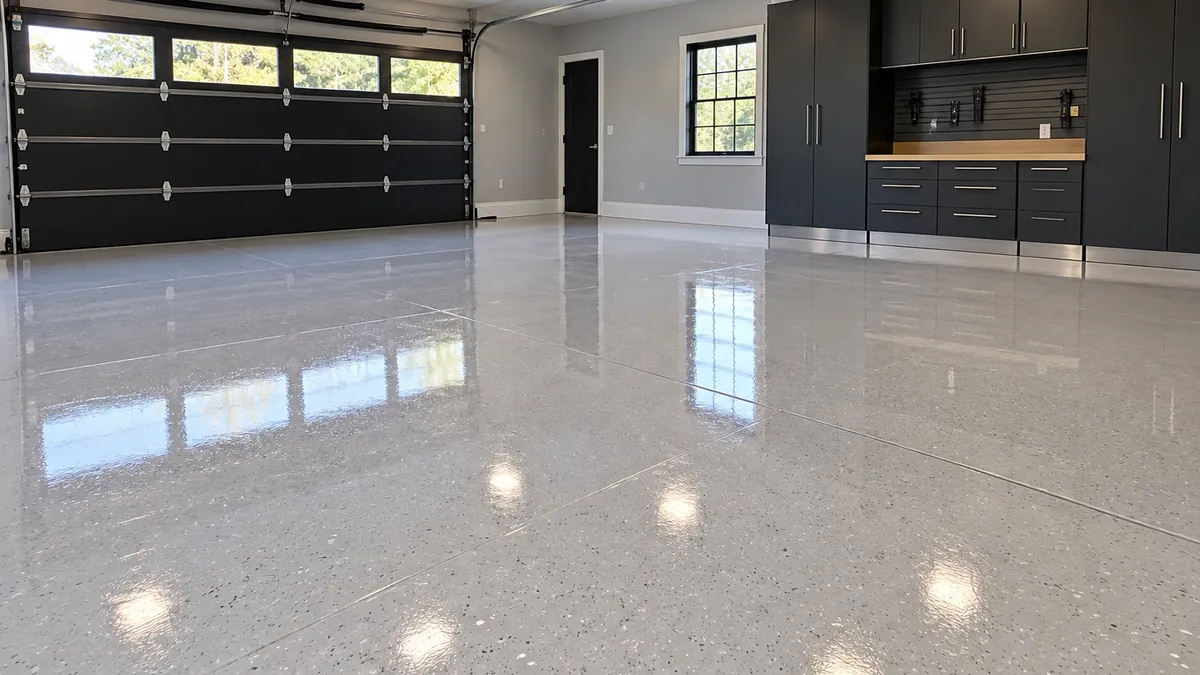
Garage floor tiles are quick to lay, hide a cracked or stained slab and lift out later. A bonded epoxy or flake coating is seamless, easier to clean, keeps water and grit on top, and becomes part of the floor. For most garages you park in, on a slab that can be repaired, a bonded coating is the stronger long-term floor. Tiles make more sense on a badly damaged slab, in a rental, or where you want the floor to come with you.
We do not sell or install tiles. We coat garage floors, so we will be plain about where tiles do well and where a coating does better. Our installed price for a coated floor is $3 to $12 per square foot, and your own number comes from a free written quote.
Garage Floor Tiles vs Epoxy at a Glance
| Point | Interlocking tiles | Bonded epoxy or flake coating |
|---|---|---|
| What it is | Plastic or rubber squares that snap together and float on the slab | A layered resin coating bonded into the ground concrete |
| Install | Lay and click together, no cure time | Grind, repair, coat in layers, then cure |
| Slab condition | Hides cracks and stains | Cracks and pits are repaired first |
| Seams | Many joints across the floor | Seamless |
| Water and dirt | Can work through seams and collect underneath | Stays on top where you can mop it |
| Cleaning | Sweep and mop, lift tiles to clean beneath | Sweep and mop |
| Feel | Slight give, can click or shift | Hard, solid, like the slab itself |
| Look | Patterns, borders, checkerboard | Flake, solid color or metallic finish |
| Moisture | Can trap damp under the tiles | Needs a dry slab, tested first |
| Removal | Lift and take with you | Ground off |
How Each One Goes Down
Tiles are about as simple as a floor gets. You sweep the slab, start at one wall and click the squares together across the floor, cutting the last row to fit. There is no cure time, so you can park the same day. That is why tiles are popular for renters and for homeowners who want a weekend project.
A bonded coating takes more work, which is where its strength comes from. We diamond grind the whole slab, repair cracks, pits and broken joints, test for moisture, and then build the floor in layers: a base coat, a color or flake layer, and a clear coat. A professional install is usually one to three days on site, and the floor then needs time to cure before you park.
Slab Condition: Hide It or Fix It
This is the biggest practical difference. Tiles float over the slab, so cracks, stains, old paint and uneven patches disappear from view. If your slab is badly cracked or heaving, tiles can be a reasonable way to live with it.
A coating does the opposite. It bonds to the concrete, so it shows the shape of the slab under it. That means we fix the slab first. Cracks are filled, pits are patched, broken joints are rebuilt, and old paint or failed coatings are ground off. The finished floor is sound underneath as well as on top. Our concrete prep and repair page explains that work, and our guide on garage floor repair before coating goes into what we fix.
Water and Dirt Under Tiles
A tiled floor has a seam every square or so across the whole garage. Snowmelt, rain off the car, spilled fluids and fine grit find those seams. Many tiles have channels to let water drain toward the door, but the dirt that washes down with it settles on the concrete underneath.
Over time that can mean:
- Grit and grime under the tiles that you only see when you lift them.
- Damp concrete that stays wet longer because it is covered.
- Odors from spills or snowmelt that sat underneath.
A bonded coating has no seams. Water, salt and spills stay on the surface, where you can squeegee them out the door and mop the floor.
Cleaning and Everyday Care
Both floors are swept and mopped. The difference is what happens underneath. On tiles, a thorough clean means lifting sections to rinse the slab below. On a coated floor, the top is the whole job. Our guide on how to clean an epoxy garage floor covers the routine.
Oil and fluids also behave differently. On a coating, a spill sits on the clear coat until you wipe it. On tiles, it can run into the seams and onto the slab.
How the Floor Feels
Tiles have a little give, which some people like under a workbench or in a home gym. They can also click, shift under a turning tire, or lift at the edges in heat, and a dropped part can bounce into a seam.
A coated floor feels like the slab: hard, solid and quiet. Rolling a creeper, a jack or a tool chest is smooth. A flake floor adds texture for grip, and we can add a grip additive to the clear coat on smoother finishes.
How the Floor Looks
Tiles come in colors and surface patterns, and you can lay borders, checkerboards or parking pads. Seams are always visible.
A coating gives a seamless finish in a flake blend, a solid color or a flowing metallic. The look is one continuous floor from wall to wall. For a side by side of the finishes, see our guide on the best garage floor coating.
Moisture From the Slab
Moisture rising through a slab is a concern for both floors. Under tiles, it can keep the concrete damp and musty with no way to dry. Under a coating, it can push up and cause blisters. That is why we test every slab for moisture before we coat and adjust the plan if it reads damp. A coating should never be laid over a known moisture problem without dealing with it first.
Removal and Changing Your Mind
Tiles win here. You can lift them, replace one damaged square, or take the whole floor with you when you move. A bonded coating is permanent until it is ground off. That is a plus if you want a floor that stays put and adds to the house, and a minus if you are renting or expect to change the space.
Cost: How to Think About It
We do not sell tiles, so we will not quote them. What we can say is how to weigh the two: tiles are a product you buy by the square and lay yourself or pay to have laid, while a coating is a service where most of the cost is prep, repair and a layered build.
Our installed price for a coated floor is $3 to $12 per square foot. For a standard 20 by 20 foot two-car garage of 400 square feet, that is $1,200 to $4,800. Repairs, the system you choose and the size of the floor move the job within that range, and each shows as a line on the written quote. Our guide on whether garage floor coating is worth it looks at the value over the life of the floor.
Which One Fits Your Garage
Tiles tend to fit when:
- The slab is badly cracked, heaving or stained and you do not want it repaired.
- You rent, or you want to take the floor with you.
- You want to lay it yourself in a day.
A bonded coating tends to fit when:
- You park in the garage and want a floor that is easy to keep clean.
- You want water, salt and spills to stay on top, not under the floor.
- You want a seamless finish that feels like solid concrete.
- The slab can be repaired, and you want it fixed rather than hidden.
FAQ
Garage floor tiles vs epoxy: which is better?
It depends on the slab and how you use the garage. Tiles go down fast, hide a cracked or stained slab and can be lifted later. A bonded epoxy or flake coating is seamless, easier to clean, keeps water and dirt on top, and feels like part of the floor. For most parked-in garages on a sound slab, a bonded coating wins.
Do garage floor tiles trap water and dirt?
They can. Snowmelt, spills and fine grit work through the seams and gather on the concrete underneath. Many tiles have drain channels, but the dirt still has to be cleaned out by lifting tiles. A bonded coating has no seams, so everything stays on top where you can mop it.
Can you put tiles over a cracked garage floor?
Yes, tiles float over most cracks and stains, which is one of their strengths. The cracks are still there underneath. Before a coating, we repair cracks, pits and broken joints so the floor is sound as well as good looking.
Are garage floor tiles easier to install than epoxy?
For a homeowner, yes: interlocking tiles snap together with no cure time. A professional coating needs grinding, repairs and a layered build, and the floor needs time to cure before you park. We tell you the walk and park times before the job is booked.
Do you install garage floor tiles?
No. We coat garage floors: flake, solid color epoxy, metallic epoxy and polyaspartic, on a diamond-ground slab. If tiles suit your garage better, that is a fair choice, and we are happy to say so.
Is epoxy or tile better if my slab has moisture?
Moisture is a concern for both. Under tiles it can leave the slab damp and musty. Under a coating it can push up and cause blisters. We test the slab before coating and change the plan if it reads damp, rather than coat over a problem.
See What a Coated Floor Would Look Like in Your Garage
If a seamless, bonded floor sounds right, we will look at your slab, tell you what it needs, and price it in writing. Request a free quote, see our concrete prep and repair work, or browse every finish on our services page.
Want Advice on Your Own Floor?
A guide can explain the options. A free quote tells you what your slab needs.
 Comparison
Flake vs Metallic vs Solid Color Garage Floors
Flake vs metallic epoxy vs solid color garage floors: how each looks, grips, hides dust and slab flaws, cleans and handles sun, and which garage each suits.
 Comparison
Garage Floor Paint vs Epoxy Coating
Garage floor paint vs epoxy: how paint and one-part epoxy paint compare with a professional epoxy system on bond, film build, hot tires, chemicals and life.
 Comparison
Polyurea vs Polyaspartic Garage Floors
Polyurea vs polyaspartic garage floors explained: how the two are related, why one is sprayed and one rolled, sun stability and how each fits a home system.
Ready for a Free Quote?
Get a free, no-obligation quote for your property.
Get Your Free QuoteOr call us directly: (919) 219-2946