
Polyurea vs Polyaspartic Garage Floors
Stoutwell Garage Renovations · November 15, 2026 · 9 min read
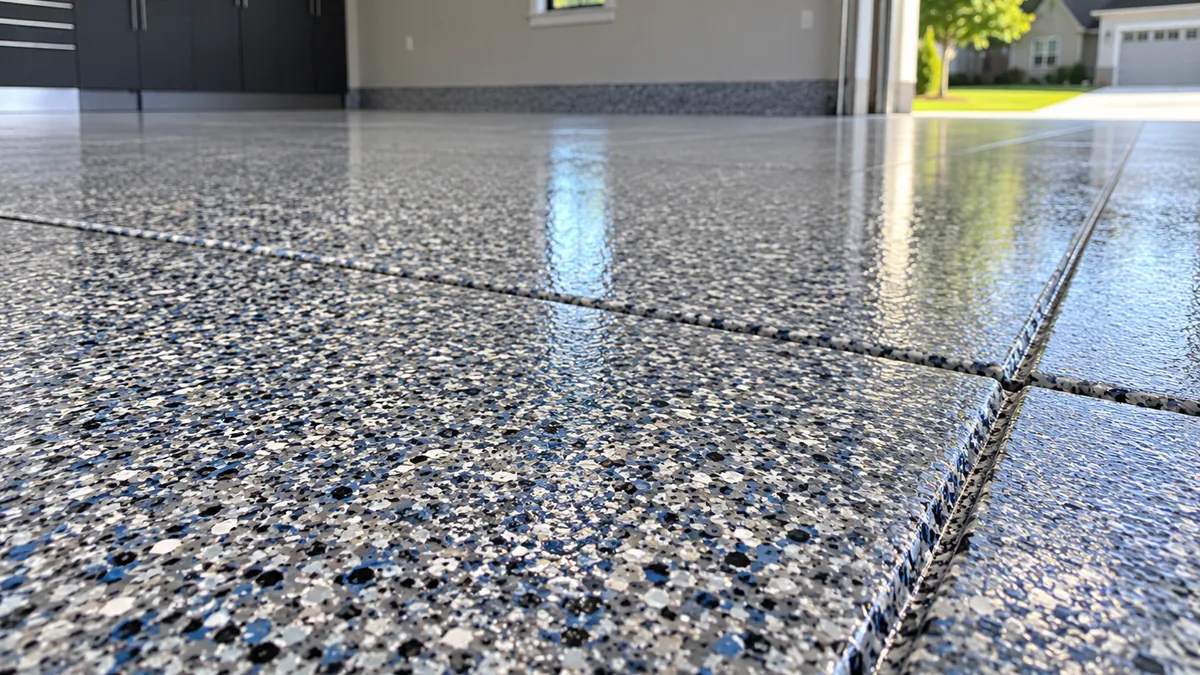
Polyurea vs polyaspartic is less of a contest than it looks: polyaspartic is a type of aliphatic polyurea, made to react more slowly so it can be rolled onto a garage floor by hand. Pure polyurea cures so fast that it is usually sprayed with heated equipment, which is why you rarely see it as the whole system on a home garage floor.
Both names turn up side by side whenever people shop for a coated garage floor, and they are often used as if they meant the same thing. They are related, but they behave differently on a slab. Below is what each one is, why one is sprayed and the other rolled, how each holds up in sunlight, and where each sits in a layered residential system. Our installed price is $3 to $12 per square foot, the system you choose moves the job within that range, and your own number comes from a free written quote.
What Polyurea and Polyaspartic Actually Are
Polyurea is a coating that forms when two liquid parts are mixed and react with each other. The reaction is extremely fast. The film that results is tough and somewhat flexible, and it can be built up thick in a single pass. That speed is a strength when a coating has to go on heavy and set almost at once, such as a truck bed liner or a tank lining. It is a problem when someone needs time to spread the material, broadcast flake into it and cut it in neatly along the walls.
Polyaspartic is a member of the same family. It is made with ingredients that slow the reaction down, so the mixed coating stays workable long enough to be rolled or squeegeed across a floor. Chemically it is still a polyurea, which is why you will see it called “polyaspartic polyurea.” In practice, when a garage floor is described as having a “polyurea” coating, the layer that was rolled by hand is very often a polyaspartic.
Aliphatic and aromatic. Polyureas come in two broad types. Aromatic types tend to darken or yellow when sunlight reaches them, so they are used where looks matter less or where another coat will cover them. Aliphatic types hold their color in sun. Polyaspartic is aliphatic, which is a big part of why it is used as the visible top layer on garage floors.
Polyurea vs Polyaspartic Side by Side
| Question | Pure polyurea | Polyaspartic |
|---|---|---|
| What it is | The parent coating family | A slower-reacting aliphatic polyurea |
| How fast it sets | Extremely fast | Fast, with working time to spread it |
| How it goes on | Usually sprayed with heated equipment | Mixed in batches and rolled or squeegeed |
| Color in sunlight | Depends on type; aromatic types can darken | Holds its color well |
| Role on a home garage | Sometimes a base coat; rarely the full floor | Clear topcoat, base coat or full system |
| What decides how long it lasts | Prep, bond and build | Prep, bond and build |
The last row is the same for both on purpose. Neither name rescues a slab that was not ground, repaired and tested.
Why Cure Speed Decides How Each Is Applied
On a garage floor, the material has to do several things before it sets. It has to flow across the ground concrete, soak into the open surface, level out, take a full broadcast of flake while it is still wet, and be cut in cleanly along walls, door tracks and the step to the house. Every one of those steps needs time.
Pure polyurea gives very little of it. That is why it is sprayed, usually with equipment that heats the two parts and mixes them at the gun. It suits large, open areas and liners. In a two-car garage with a water heater, a step and a door track, it is hard to place by hand without lap marks or thin spots.
Polyaspartic was developed to close that gap. It still cures much faster than epoxy, but the installer can mix a batch, pour it out and roll it before it starts to set. The working time is still short, so the floor is coated in sections with a steady rhythm. That short window is also why polyaspartic punishes rushed or poor prep, which we cover in our polyaspartic pros and cons guide.
Sunlight and Color
Where sun reaches the floor, the topcoat decides how the color looks in a few years. An aliphatic polyaspartic clear coat holds its gloss and color far better than epoxy, which can yellow and dull near an open door. Some pure polyureas used as base coats are aromatic, and they can darken if they are left exposed, so they are covered with a UV-stable topcoat.
If you are weighing a polyaspartic topcoat against a plain epoxy floor, our epoxy vs polyaspartic guide compares those two on sun, cure speed and cold weather.
How They Are Used in a Residential Garage System
Most coated garage floors are not one material. They are built in layers, and each layer has a job:
- The slab. We diamond grind the whole floor, repair cracks, pits and broken joints, and test for moisture. This is the step that decides most failures. See concrete prep and repair.
- The base coat. This layer bonds to the ground concrete and carries the color. It can be epoxy, a polyurea or a polyaspartic, depending on the slab and the system.
- The flake broadcast. On a flake floor, decorative flake is thrown into the wet base until the color underneath is covered. The excess is swept and scraped off once it sets.
- The clear coat. A clear topcoat seals the flake and takes the wear from tires, boots and tools. On most systems this layer is a polyaspartic, because it holds its color in sun and resists wear.
So when a floor is sold as “polyurea” or “polyaspartic,” the useful question is which layer that name refers to. On our written quote we name the base, the broadcast and the topcoat separately, so you know what each layer is.
Hybrid Systems
“Hybrid” is used loosely. It most often means one of these:
- An epoxy base with a polyaspartic topcoat. Epoxy has a longer working time and soaks into the slab well, and the polyaspartic on top brings sun stability and wear resistance. This is a very common garage build.
- A polyurea or polyaspartic base with a polyaspartic topcoat. A faster system with the same family top to bottom, often chosen when a shorter install matters.
- A blended product. Some coatings mix chemistries in one can. How it behaves comes down to the exact product, not the word on the label.
None of these is right for every garage. A damp slab, heavy repairs or a sunny, open door can each change which base and topcoat make sense. We choose the build after we have seen and tested the slab, and if you want a straight ranking of the options, our best garage floor coating guide sets them side by side.
What Actually Decides How It Holds Up
The chemistry name gets a lot of attention, but on a home garage floor it is not what decides how the floor holds up over the years.
What decides how a coated garage floor holds up is plainer:
- Bond. A coating only stays down if it is bonded into sound, ground concrete. A topcoat over a slab that was only cleaned can lift under hot tires, whatever it is called.
- Moisture. Water vapor rising through the slab can push any coating up. We test before we coat.
- Build. A layered system with a full flake broadcast and a proper clear coat has more material to wear through than one thin coat.
- Care. Sweeping grit, rinsing off winter salt and using pads under jack stands matter more over the years than the chemistry name.
Our guide on how long garage floor coating lasts goes through each of these.
Which One We Use on a Home Garage
On a residential garage we roll our systems by hand, so the polyurea we use is polyaspartic. It is the clear topcoat on most of our floors, over an epoxy or polyaspartic base, and we use a full polyaspartic system where a faster install suits the job and the slab allows it. We tell you which material is in each layer, why we chose it for your slab, and the walk and park times, before the job is booked. Our polyaspartic coating service page shows that system.
FAQ
Polyurea vs polyaspartic: what is the difference?
Polyaspartic is a type of aliphatic polyurea. Pure polyurea reacts so fast it is usually sprayed with heated equipment, while polyaspartic is made to react more slowly, so it can be mixed and rolled onto a garage floor by hand. On a home garage, polyaspartic is the one you will usually see.
Is polyaspartic a polyurea?
Yes. Polyaspartic belongs to the polyurea family. It is built from ingredients that slow the reaction down, which gives the installer working time. That is why it is sometimes called polyaspartic polyurea.
Why is pure polyurea rarely used on home garage floors?
It sets so quickly that there is little or no time to spread it, wet out a flake broadcast or work it into the edges by hand. It is normally sprayed with heated, plural-component equipment, which suits large jobs and liners more than a two-car garage.
Does polyaspartic turn yellow in the sun?
Aliphatic polyaspartic holds its color in sunlight far better than epoxy, which is why it is so often used as the clear topcoat on a garage floor. Some pure polyureas are aromatic and can darken in sun, so the type matters as much as the name.
Is polyurea stronger than polyaspartic?
Neither name decides it on its own. On a home garage, how well the system is bonded to a ground, repaired, dry slab decides how the floor holds up far more than the label on the topcoat.
What is a hybrid garage floor coating?
Usually a system that uses different materials in different layers, such as an epoxy or polyurea base coat, a flake broadcast and a polyaspartic clear coat. Each layer does a different job, and we name each one on our written quote.
Get the Right System for Your Slab
The name on the can matters less than the slab under it and how each layer is chosen. We grind, repair and test every floor, then build the system that suits it and tell you exactly what goes in each layer. Request a free quote, see our polyaspartic coating system, or read how we price on our pricing page.
Want Advice on Your Own Floor?
A guide can explain the options. A free quote tells you what your slab needs.
 Comparison
Flake vs Metallic vs Solid Color Garage Floors
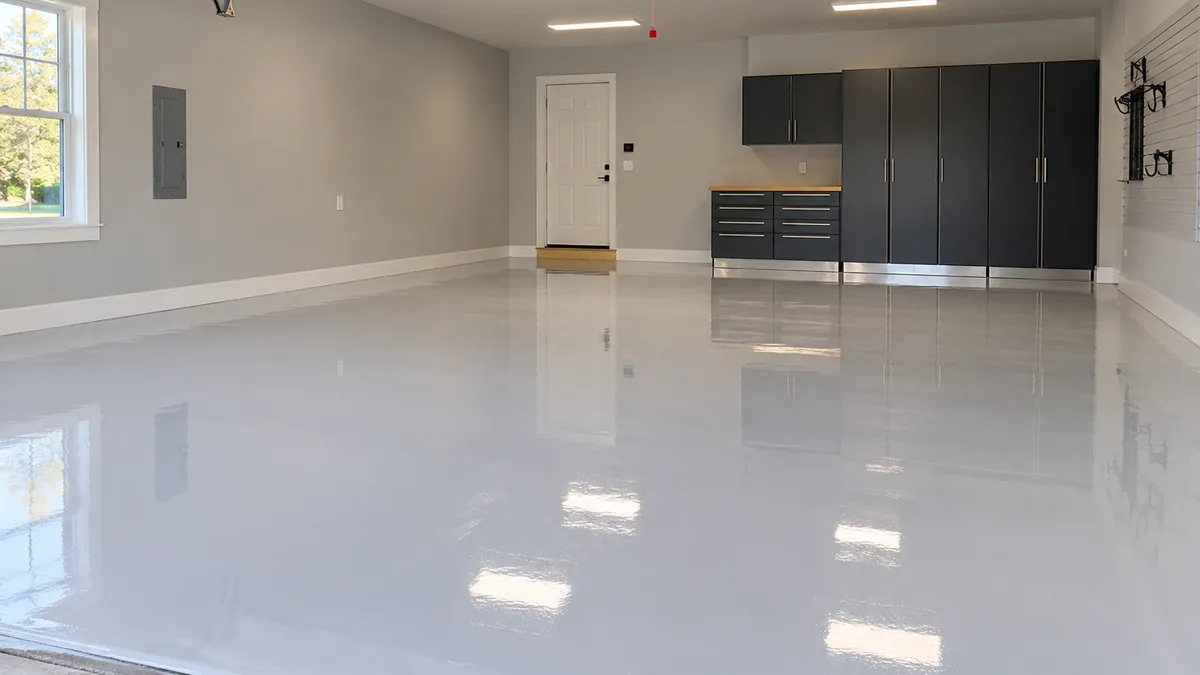
Flake vs metallic epoxy vs solid color garage floors: how each looks, grips, hides dust and slab flaws, cleans and handles sun, and which garage each suits.
 Comparison
Garage Floor Paint vs Epoxy Coating
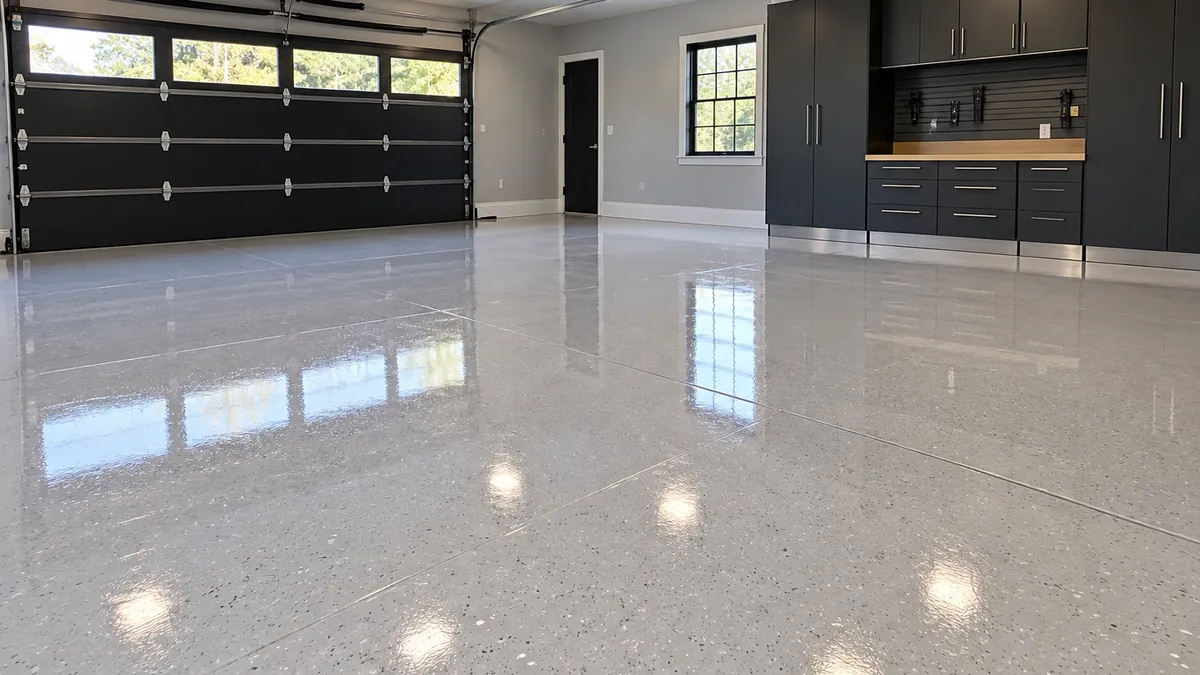
Garage floor paint vs epoxy: how paint and one-part epoxy paint compare with a professional epoxy system on bond, film build, hot tires, chemicals and life.
 Comparison
Garage Floor Tiles vs Epoxy Coating
Garage floor tiles vs epoxy: how interlocking tiles and a bonded coating compare on install, cracked slabs, water under the floor, cleaning, look and removal.
Ready for a Free Quote?
Get a free, no-obligation quote for your property.
Get Your Free QuoteOr call us directly: (919) 219-2946