
Polyaspartic Garage Floors: Pros, Cons and Cure Speed
Stoutwell Garage Renovations · November 15, 2026 · 9 min read
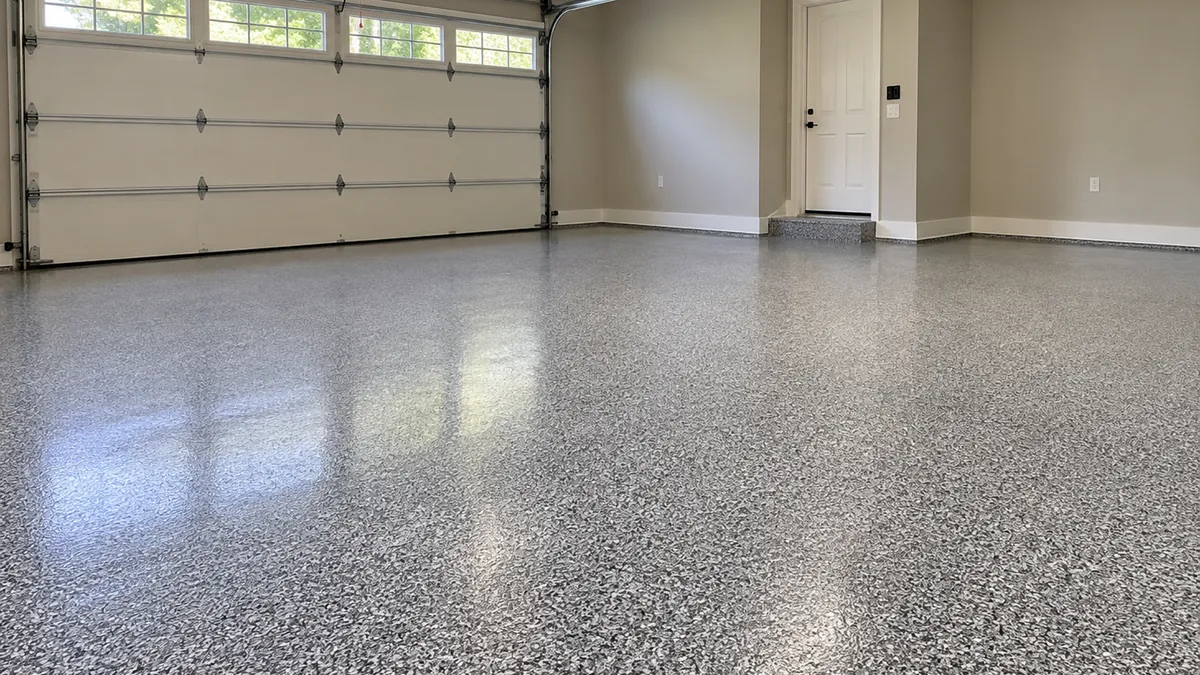
A polyaspartic garage floor cures fast, holds its color in sunlight and wears well, and it is often marketed as a one day garage floor coating. The trade-off is a short working time that punishes poor prep, and a fast schedule that only holds when the slab does not need extra work.
Polyaspartic is the coating behind most fast garage floor schedules. That speed is real, but it is not the whole story. Below are the pros, the cons, what decides whether a short install suits your slab, what adds time, and what we check before we tell you how long your floor will take. Our installed price is $3 to $12 per square foot, and your own number comes from a free written quote.
Polyaspartic Pros and Cons at a Glance
| Pros | Cons |
|---|---|
| Cures fast, so the job is shorter | Short working time; rushed or poor prep shows |
| Holds its color in sunlight | A short schedule depends on the slab |
| Resists wear well as a top layer | Smooth clear coat can be slick when wet |
| Can go on across a wider temperature range | Repairs and moisture can add a day |
| A shorter job on a sound slab | Usually sits higher within our price range |
If you are still choosing between polyaspartic and a plain epoxy floor, our epoxy vs polyaspartic guide covers that comparison on its own. If you are unsure how polyaspartic relates to polyurea, see polyurea vs polyaspartic garage floors.
The Pros
A fast cure. Polyaspartic sets much faster than epoxy. Layers can go on one after another in the same day instead of waiting overnight between coats, and the garage is back in use sooner.
Color that holds in sun. Polyaspartic is a UV-stable coating. Where the garage door is open on sunny afternoons, or windows throw light across the floor, it holds its gloss and color far better than epoxy, which can yellow near the door.
A tough top layer. As a clear coat over a flake or color base, polyaspartic stands up well to tires, boots and dropped tools. That is why we finish most of our layered floors with it.
A wider temperature window. Polyaspartic can be applied across a wider range of temperatures than epoxy. That makes it easier to schedule in spring and fall, when cool mornings would slow an epoxy job.
A shorter job. Put those together and, on a slab that only needs grinding, a full system with a base, a flake broadcast and a clear coat goes down in fewer days than an epoxy floor. Whether it fits in a single visit depends on the slab.
The Cons
A short working time. The same fast cure that shortens the job also shortens the time to spread each batch. The floor is coated in sections with a steady rhythm. There is no time to fix a missed patch of prep once the coating is down, so the grinding, repairs and cleaning have to be right first.
Prep cannot be skipped to save the day. A tight schedule tempts anyone to cut the grind short. A polyaspartic over a slab that was only cleaned or lightly scuffed can lift under hot tires, just like any other coating. Speed is only an advantage on a properly prepared slab.
A short schedule depends on the slab. Cracks, spalled joints, pitting, an old coating or paint, oil-soaked spots and moisture each take their own time. Some of them need a repair material that has to set before the coating goes over it.
It can be slick when wet. A smooth, glossy clear coat is slippery under wet shoes, the same as any smooth coating. A full flake broadcast adds texture, and a fine grit in the topcoat adds more.
It sits higher in the range. A polyaspartic system usually moves a job higher within our $3 to $12 per square foot range than a basic epoxy floor, because the material costs more and the application is more demanding. It shows on the written quote as part of the system we recommend.
Whether a One Day Garage Floor Coating Fits Your Slab
Whether a short install suits your floor depends on these:
- The slab is sound. Hairline cracks only, no broken joints, no heaving or deep pitting.
- It is bare concrete. There is no old epoxy, paint or sealer that has to be ground off first.
- It reads dry. The moisture test comes back within what the base coat can handle.
- The garage is cleared. Cars, shelving, bikes and boxes are out before we arrive.
- The weather suits the product. Very cold or very humid days can slow the cure, even for polyaspartic.
- The size is normal. One- and two-car garages go faster than a large three-car floor with extra repairs.
When the slab ticks those boxes, the schedule is at its shortest, and we tell you the walk and park times before the job is booked.
What Adds Time to a Polyaspartic Job
Crack and joint repairs. Filling cracks and rebuilding broken joints is part of every job we do, but deeper repairs need time to set before they are ground flush. A floor with a lot of damage takes longer. Our concrete prep and repair page explains that work.
Moisture. If the slab reads damp, we change the plan, which can mean a different base coat with a longer cure. A coating laid over moisture can blister months later, so this is not a step we hurry. More on fixing slab problems before coating is in our garage floor repair before coating guide.
An old coating. Paint, a peeling kit coating or old epoxy has to be ground off, or proven well bonded, before anything goes over it. That grinding takes longer than a bare slab.
Oil and stains. Heavy oil soaked into the concrete has to be cleaned out or ground away, or the coating will not bond over it.
Size and layout. A large floor, a lot of edges, a step to the house, floor drains and a water heater all add cutting-in time.
Our how long does it take to epoxy a garage floor guide lays out a typical schedule by system, from one to three days on site.
What We Check Before We Promise a Day
We do not give you a schedule until we have looked at the floor. At the quote we:
- Look at every crack, joint and pit and note what needs to be filled or rebuilt.
- Check for an old coating or sealer, and whether it is bonded or has to come off.
- Test the slab for moisture, and tell you what we will do if it reads damp.
- Look at the light and the door, so the topcoat suits how much sun the floor gets.
- Measure the floor, including steps, drains and edges.
From that we tell you how many days the job will take on site, when you can walk on the floor, and when you can park on it, before the job is booked. If your slab needs more time, you know before we start, not on the afternoon of the install.
How a Polyaspartic Install Runs
On a sound, prepared slab, the work runs in this order:
- Grind. We diamond grind the whole floor so the coating bonds into sound concrete, and vacuum the dust.
- Repair. We fill hairline cracks and small pits with a fast-setting repair material and grind it flush.
- Base coat. We roll the base coat across the floor in sections.
- Flake. On a flake floor, we broadcast flake into the wet base until no color shows through.
- Scrape and sweep. Once the base sets, we scrape off loose flake and vacuum the floor.
- Clear coat. We roll the polyaspartic clear coat over the flake, with grit added if you want more grip.
- Walkthrough. We go over the floor with you and confirm the walk and park times.
Is Polyaspartic Right for Your Garage
Polyaspartic suits a garage that gets sun through an open door, a household that wants the garage back quickly, and a floor where a tough, clear top layer makes sense. It is not a fix for a slab with unresolved moisture or heavy damage, and on a fully shaded floor where time is not a concern, an epoxy system can be a sensible choice. If you want every option side by side, our best garage floor coating guide ranks them.
FAQ
Is a one day garage floor coating realistic?
It depends on the slab. Polyaspartic cures fast, which is why it is often marketed as a one day garage floor coating, but crack and joint repairs, moisture in the slab or an old coating to remove can each add time. We tell you the schedule for your floor before the job is booked.
What are the main pros of a polyaspartic garage floor?
It cures fast, holds its color in sunlight far better than epoxy, resists wear well as a top layer, can be applied across a wider range of temperatures, and on a sound slab goes down in fewer days than epoxy.
What are the cons of a polyaspartic garage floor?
Its working time is short, so it does not forgive poor prep or rushed application. Whether a short schedule works depends on the slab. A smooth clear coat can be slick when wet unless texture is added, and the system usually sits higher within our price range than a basic epoxy floor.
How soon can you park on a polyaspartic floor?
Sooner than on epoxy, but it depends on the product, the build and the temperature. We give you the walk and park times for your floor before the job is booked, and waiting the full time protects the finish.
Is a polyaspartic garage floor slippery?
A smooth, glossy clear coat can be slick under wet shoes. A full flake broadcast adds texture, and we can add a fine grit to the topcoat for more grip where the floor gets wet.
Can polyaspartic go over a damp slab?
No coating fixes moisture rising through a slab. We test before we coat, and if the slab reads damp we change the base coat or the plan, which can add time to the job.
Find Out How Long Your Floor Will Take
How long your garage takes depends on the slab, and we will tell you plainly once we have seen it. Request a free quote, see our polyaspartic coating system, or read how we price on our pricing page.
Want Advice on Your Own Floor?
A guide can explain the options. A free quote tells you what your slab needs.
Guide Best Garage Floor Coating for Your Home
The best garage floor coating depends on how you use the garage. Flake, solid color epoxy, metallic and polyaspartic ranked by use, with a side by side table.
 Guide
Can You Coat Over Old Epoxy or Floor Paint?
Repainting an epoxy floor works when the old coat is still bonded. When old epoxy or garage floor paint must be ground off first, and how to check your floor.
 Guide
Garage Floor Coating Colors: How to Choose
How to choose garage floor coating colors: flake blends, solid colors and metallic tones, what hides dust and tire marks, light, sun and matching the house.
Ready for a Free Quote?
Get a free, no-obligation quote for your property.
Get Your Free QuoteOr call us directly: (919) 219-2946