
How Long Does It Take to Epoxy a Garage Floor?
Stoutwell Garage Renovations · November 15, 2026 · 7 min read
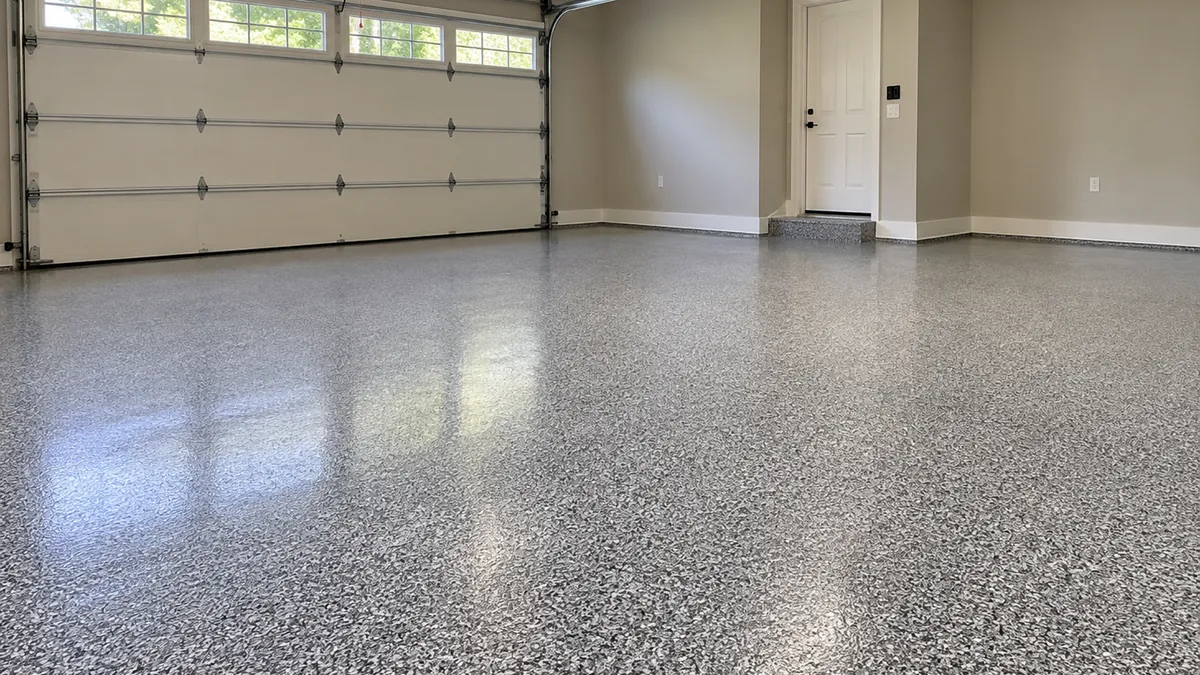
A professional epoxy garage floor usually takes one to three days on site, from grinding the slab to the final clear coat. After that, you can usually walk on it in about a day, while parking often waits several days for epoxy, and less with a polyaspartic system.
How long it takes to epoxy a garage floor depends less on the coating itself than on the slab under it. A clean, sound floor moves quickly; cracks, an old coating or a damp slab add time before any color goes down. Our installed price is $3 to $12 per square foot, and your own number, along with your own timeline, comes from a free written quote. Here is what each stage involves, what stretches it, and how to plan around the days your garage is out of use.
How Long It Takes to Epoxy a Garage Floor, Stage by Stage
| Stage | Typical timing | What happens |
|---|---|---|
| Emptying the garage | You, before day one | Cars, bins, shelves and anything on the floor come out |
| Grinding and repair | Day one | The slab is diamond ground, cracks and pits are filled |
| Base coat | Day one | The first coat bonds into the ground concrete |
| Flake or color layer | Day one or two | Flake is broadcast or a color coat goes on |
| Clear coat | Day two, sometimes day three | The wear layer goes on over the color |
| Walk on it | About a day after the last coat | Socks or clean shoes, no heavy items |
| Park on it | Often several days for epoxy, sooner with polyaspartic | Cars and heavy storage go back in |
These are typical timings for a home garage, not a promise for a particular floor. We give you your own schedule before the job is booked.
What a Typical Job Looks Like, Day by Day
Before Day One
You clear the garage. Everything that touches the floor needs to come out, including shelving that stands on the slab, so we can grind and coat wall to wall. We look at the slab beforehand and test it for moisture, so the plan already accounts for what the concrete needs.
Day One: Grind, Repair and Base Coat
We diamond grind the whole floor. Grinding removes the weak top layer, stains and residue, and opens the concrete so the coating can bond into it. Then we vacuum up the dust, fill cracks, patch pits and treat the joints. On many floors the base coat goes on the same day, once the repairs are ready to coat over.
Day Two: Color and Clear Coat
On a flake floor, flake is broadcast into the base coat, left to set, then the loose flake is scraped and swept off before the clear coat goes on. On a solid color floor, a color coat goes down before the clear coat. The clear coat is the wear layer that takes tires, tools and cleaning.
Day Three, When It Is Needed
Some floors need a third day: a second clear coat, a metallic epoxy finish built in several layers, or extra time for a repair to set. A fast-curing polyaspartic system can shorten the whole job, because each coat is ready for the next sooner.
What Adds Time to the Job
| What adds time | Why |
|---|---|
| Crack, pit and joint repair | Each repair has to be filled and ready before it can be coated |
| An old coating or floor paint | It usually has to be ground off before the new system goes on |
| A slab that tests damp | The plan may change to suit the moisture result |
| A cold garage | Coatings cure more slowly when the slab and air are cool |
| A larger floor | A three-car garage simply takes longer to grind and coat |
| Multi-coat finishes | Metallic floors and extra clear coats add a layer each |
Old coatings are one of the most common surprises. Our guide on whether you can coat over old epoxy or floor paint explains when an old finish can stay and when it has to come off. Cold matters too: in cooler months we check the slab and the forecast before scheduling, and we would rather move a date than coat a floor that will not cure properly.
When You Can Walk and Park on It
The time on site is only part of the answer. A new floor needs to cure before it is used, and the two numbers people ask about most are:
- Walking on it: usually after about a day, in socks or clean shoes.
- Parking on it: often several days for an epoxy system, depending on the product and the temperature. A polyaspartic system cures faster, so on many floors the wait is shorter.
We tell you your walk and park times before the job is booked, so there are no surprises. Our page on epoxy garage floor downsides explains why that cure wait matters, and the polyaspartic garage floor pros and cons guide covers the faster cure in more detail.
How Long It Takes to Do It Yourself
A store kit looks like a weekend job, but it rarely is. Doing it yourself usually means a day of emptying and cleaning, a day of etching, rinsing and waiting for the slab to dry, and then rolling the coat quickly before it starts to set. Add the cure time before you can park, and a kit often takes the garage out of use for longer than a professional job. Our guide comparing a DIY epoxy kit with a professional floor goes through the real weekend in detail. We coat floors and do not sell kits.
How to Plan Around the Install
A little planning keeps the days without your garage easy:
- Find a home for the cars. Plan for the driveway or street from the first day until your park date.
- Move everything out the day before. Bins, bikes, tools, shelving and anything stored on the floor.
- Think about what lives in the garage. A freezer, a water heater or a laundry area may need a plan for access or power while the floor is coated.
- Keep pets and children out until the walk time we give you.
- Pick a sensible season. If your garage is unheated, a milder stretch of weather can keep the job on schedule.
- Put things back in order. Light items first after the walk time, then cars and heavy storage after the park time, with pads under jack stands and heavy shelving.
FAQ
How long does it take to epoxy a garage floor?
A professional install usually takes one to three days on site, depending on the system and how much prep and repair the slab needs. After that, foot traffic usually waits about a day and parking often several days for epoxy, sooner with a polyaspartic system.
Can a garage floor be coated in a single day?
Sometimes. A floor with little repair and a fast-curing polyaspartic system can often be finished on site in a short time. Floors with heavy repair, an old coating to remove or a multi-coat metallic finish take longer. We tell you the plan before the job is booked.
When can I walk on a new epoxy garage floor?
Usually after about a day, in socks or clean shoes. The exact time depends on the product and the temperature, and we tell you before booking.
When can I park on a new epoxy garage floor?
Parking on an epoxy floor often waits several days, and longer in a cool garage. A polyaspartic system cures faster, so the wait is often shorter. We give you your walk and park times before the job is booked.
What makes a garage floor coating job take longer?
Extra crack and pit repair, grinding off an old coating or paint, a slab that tests damp, a cold garage that slows curing, a larger floor, and multi-coat finishes such as metallic epoxy.
Do I need to empty my garage before it is coated?
Yes. The whole floor has to be clear, including shelves that sit on the slab, so it can be ground and coated wall to wall. Plan where the cars and the contents will go until the walk and park times have passed.
Get Your Own Timeline
Every slab is different, so the honest answer to how long your floor will take starts with a look at it. We will tell you the days on site and your walk and park times before anything is booked. Request a free quote, see how we price on our pricing page, or compare finishes on our services page.
Want Advice on Your Own Floor?
A guide can explain the options. A free quote tells you what your slab needs.
Guide Best Garage Floor Coating for Your Home
The best garage floor coating depends on how you use the garage. Flake, solid color epoxy, metallic and polyaspartic ranked by use, with a side by side table.
 Guide
Can You Coat Over Old Epoxy or Floor Paint?
Repainting an epoxy floor works when the old coat is still bonded. When old epoxy or garage floor paint must be ground off first, and how to check your floor.
 Guide
Garage Floor Coating Colors: How to Choose
How to choose garage floor coating colors: flake blends, solid colors and metallic tones, what hides dust and tire marks, light, sun and matching the house.
Ready for a Free Quote?
Get a free, no-obligation quote for your property.
Get Your Free QuoteOr call us directly: (919) 219-2946