
How Long Does Garage Floor Coating Last?
Stoutwell Garage Renovations · November 14, 2026 · 7 min read
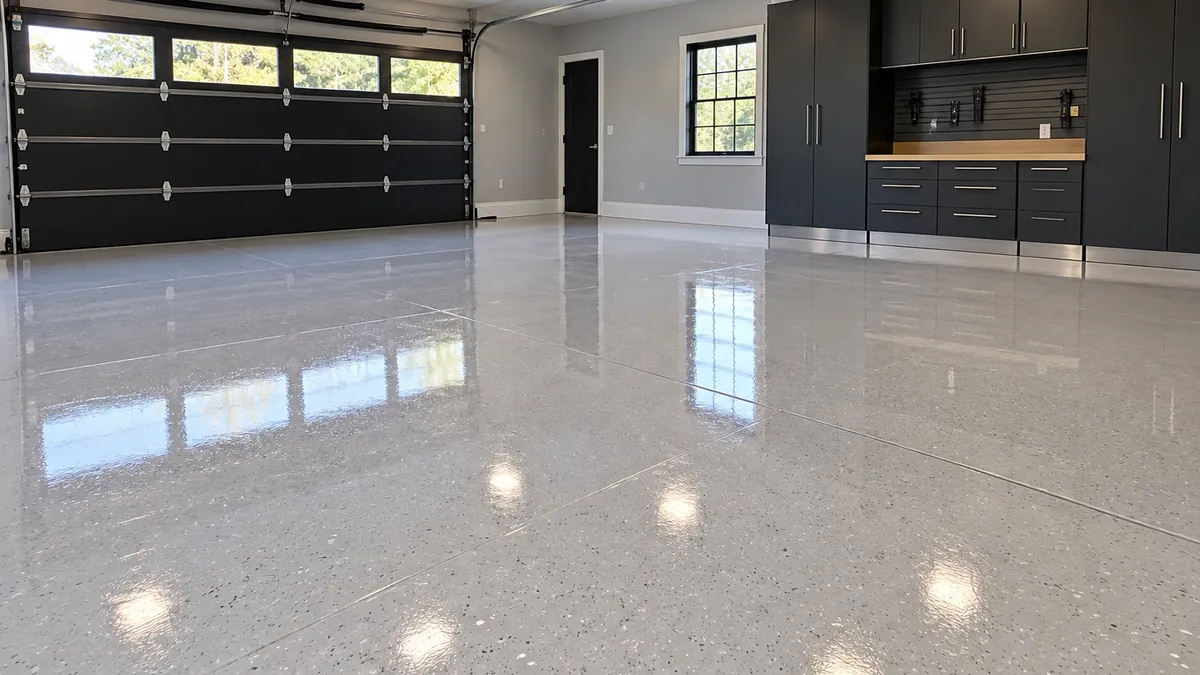
A well-bonded, multi-layer garage floor coating with a durable clear coat is built to last many years in a home garage. A thin coating over an unprepared slab can start peeling within a year or two. The difference is almost never the product name on the label. It is how the slab was prepared, how thick the system was built, and how the floor is used and cared for afterwards.
We do not promise a number of years for any floor, because sunlight, tires, salt and the slab itself all play a part. What we can tell you is what shortens a coating’s life, what extends it, and what we do on every job so the floor has the best chance of a long one. Our installed price is $3 to $12 per square foot, and your own number comes from a free written quote.
Typical Lifespans by Type of Coating
| Coating | How long it tends to last in a home garage | What decides it |
|---|---|---|
| Garage floor paint | Often a few years or less in parking lanes | Thin film, little bond, lifts under hot tires |
| Store epoxy kit on an acid-etched slab | Often a few years, sometimes less where cars park | Shallow prep and one thin coat |
| Professional epoxy system with a clear coat | Many years with normal care | Ground slab, layered build, cure before parking |
| Epoxy or flake base with a polyaspartic clear coat | Many years; holds its color well in sun | Same prep, with a topcoat that resists yellowing and wear |
These are typical spans in normal residential use, not a promise for a particular floor. A garage that bakes in afternoon sun, sees heavy tools, or is driven on in snowy, salty winters will wear faster than one that is mostly parked in and swept often.
What Shortens a Coating’s Life
Poor bonding. If the coating is only stuck to the smooth, weak top layer of the concrete, it can let go in patches. Hot tires, temperature swings and moisture find those weak spots first. This is the main reason floors fail early.
Moisture from below. Water vapor rising through a slab can push up under a coating and cause blisters or peeling, sometimes months after the job.
A thin build. A single thin coat has little material to wear through. Traffic lanes and the spots where tires turn show wear first.
Sunlight on epoxy. Epoxy left without a UV-stable clear coat can yellow and dull where sun reaches it, which ages the look of the floor even when the bond is fine.
Parking too soon. A coating that has not fully cured is softer and easier to mark or lift. Driving on it early can shorten its life from day one.
Grit and salt. Sand and road grit act like sandpaper under tires and boots. Winter salt left to sit can leave a film that dulls the surface.
Impact and dragging. Dropped tools, metal jack stands and heavy items dragged across the floor can chip or gouge the clear coat.
What Makes a Coating Last
The longest-lasting floors share the same starting point:
- A ground slab. We diamond grind the whole floor so the base coat bonds into sound concrete.
- Repairs first. Cracks, pits and broken joints are fixed before coating, so they do not become the place where wear and peeling begin. See concrete prep and repair.
- A moisture test. We test the slab before coating and adjust the plan if it reads damp.
- A layered system. A base coat, a full layer of color or flake, and a clear finish coat on top, rather than one coat.
- The right topcoat. Where sun reaches the floor, a polyaspartic clear coat holds its color and gloss far better than epoxy.
- A full cure. We tell you when you can walk on the floor and when you can park on it, and it pays to wait.
Caring for a Coated Floor
Care does not take much, and it adds years:
- Sweep or dust-mop regularly to keep grit from scratching the clear coat.
- Rinse off winter salt and slush rather than letting it dry on the floor.
- Mop with a mild, pH-neutral cleaner and plain water. Harsh acids, citrus degreasers and strong solvents can dull the finish over time.
- Wipe up oil, fuel and brake fluid soon after a spill.
- Use pads under jack stands, kickstands and heavy storage, and avoid dragging metal across the floor.
- Put a mat where the car drips in winter if snowmelt pools in one spot.
Our guide on how to clean an epoxy garage floor goes step by step through routine cleaning, spills, tire marks and winter salt.
Signs a Floor Needs Attention
A floor near the end of its life, or one that was not bonded well, tends to show it:
- Peeling or lifting, often at the edges, at control joints, or in the tire lanes.
- Blisters or bubbles that point to moisture underneath.
- Worn-through lanes where the color or the flake is gone and bare concrete shows.
- Yellowing or a chalky dullness in the sunny area near the door.
- Chips that keep spreading rather than staying small.
A dull or lightly scratched clear coat on a floor that is otherwise bonded is usually not a failure. It can often be refreshed with a new topcoat after a light grind. Peeling and blistering are different: that coating has to be ground off and the floor coated again from the slab up. Our guide on coating over old epoxy or floor paint explains how we tell the two apart.
How Lifespan Fits the Cost
At $3 to $12 per square foot installed, a standard 20 by 20 foot two-car floor runs $1,200 to $4,800. Spread over the years a well-installed floor lasts, the yearly cost is modest, while a cheaper coating that has to be stripped and redone soon can end up costing more. Our guide on whether garage floor coating is worth it goes further into that trade-off, and the epoxy garage floor downsides page explains each common failure in detail.
FAQ
How long does a garage floor coating last?
A well-bonded, multi-layer coating with a durable clear coat is built to last many years in a home garage. A thin coat over an unprepared slab can start to peel within a year or two. Prep, build, sunlight, tires and care decide where a floor falls.
How long does an epoxy garage floor last?
On a properly ground, dry slab, with a clear coat over it, epoxy holds up for many years of normal family use. Uncoated epoxy in strong sun can yellow sooner, and epoxy over a slab that was only cleaned can lift early under hot tires.
Does polyaspartic last longer than epoxy?
As a top layer, polyaspartic holds its color in sunlight far better than epoxy and resists wear well, which is why it is often used as the clear coat over an epoxy base. On any system, how well the base is bonded matters more than the topcoat name.
What makes a garage floor coating fail early?
Little or no grinding, moisture rising through the slab, a single thin coat, parking before the floor has cured, and grit or salt left to grind into the surface. Most early failures trace back to prep.
How do you make a garage floor coating last longer?
Start with a ground, repaired and moisture-tested slab and a layered system. After that, give it the full cure before parking, sweep grit regularly, rinse off winter salt, use a mild cleaner, and put pads under jack stands and heavy stands.
Can an old garage floor coating be recoated?
Often, yes. If the coating is still well bonded and only worn or dulled on top, the clear coat can be lightly ground and a fresh topcoat added. If it is peeling or lifting, it has to be ground off and the floor coated again from the slab up.
Start With a Floor Built to Last
How long your floor lasts is mostly decided on the day it is installed. We grind, repair, test and build every floor in layers, and we will tell you plainly what your slab needs. Request a free quote, read how we price on our pricing page, or see every finish on our services page.
Want Advice on Your Own Floor?
A guide can explain the options. A free quote tells you what your slab needs.
 Guide
Best Garage Floor Coating for Your Home
The best garage floor coating depends on how you use the garage. Flake, solid color epoxy, metallic and polyaspartic ranked by use, with a side by side table.
 Guide
Can You Coat Over Old Epoxy or Floor Paint?
Repainting an epoxy floor works when the old coat is still bonded. When old epoxy or garage floor paint must be ground off first, and how to check your floor.
 Guide
Garage Floor Coating Colors: How to Choose
How to choose garage floor coating colors: flake blends, solid colors and metallic tones, what hides dust and tire marks, light, sun and matching the house.
Ready for a Free Quote?
Get a free, no-obligation quote for your property.
Get Your Free QuoteOr call us directly: (919) 219-2946